Moses was a pivotal figure in the Bible, known for leading the Israelites out of Egyptian slavery and receiving the Ten Commandments from God. His life reflects a journey of faith, courage, and obedience, showcasing how God can use anyone to fulfill divine purposes.
Who was Moses?
Moses, a central figure in the Old Testament, lived during the 13th century BCE. Born into a Hebrew family during a time of great oppression in Egypt, Moses's early life was marked by danger. Pharaoh had ordered the killing of all newborn Hebrew boys, but Moses's mother saved him by placing him in a basket along the Nile River. He was discovered by Pharaoh's daughter and raised in the Egyptian royal court, giving him a unique position of influence and education (Exodus 2:1-10).
In the biblical narrative, Moses is chosen by God to lead the Israelites out of slavery. His role as a prophet and leader is foundational, as he guides his people through the desert towards the Promised Land. The Bible introduces Moses as a man who speaks directly with God, a characteristic that sets him apart in Scripture (Exodus 33:11). His life is not only a story of liberation but also one of receiving and imparting God's laws, which are central to Jewish and Christian teachings.
The story of Moses
Moses's story begins with his miraculous survival as an infant. Raised in Pharaoh's palace, he later flees to Midian after killing an Egyptian who was beating a Hebrew slave. In Midian, Moses encounters God in the form of a burning bush, where he receives his divine calling to free the Israelites (Exodus 3:1-10). Despite his initial reluctance and protests of inadequacy, Moses accepts this monumental task, showcasing his humility and obedience to God's will.
One of the major events in Moses's life is the Exodus, where he leads the Israelites out of Egypt following a series of plagues that God sends upon the Egyptians. The parting of the Red Sea is a dramatic demonstration of God's power and Moses's faith (Exodus 14:21-22). Throughout their journey in the wilderness, Moses continually acts as a mediator between God and the people, receiving the Ten Commandments on Mount Sinai, which form the ethical foundation for Israelite society (Exodus 20:1-17).
Moses faces numerous challenges, including the people's frequent rebellion and doubt. Despite these hardships, he remains steadfast in his commitment to God's commands. His relationship with God is marked by open communication and deep trust, which is evident in instances like when God provides manna from heaven to sustain the Israelites (Exodus 16:4).
Key verses about Moses
-
Exodus 3:10 (NIV): "So now, go. I am sending you to Pharaoh to bring my people the Israelites out of Egypt."
This verse marks Moses's calling and highlights his role as a deliverer, as seen in Exodus 3:10 on BibleGateway. Despite his initial hesitation, it reveals his eventual acceptance of God's mission. -
Exodus 14:21 (NIV): "Then Moses stretched out his hand over the sea, and all that night the Lord drove the sea back with a strong east wind and turned it into dry land."
This passage underscores Moses's faith and leadership, emphasizing his trust in God's power to deliver His people. -
Exodus 33:11 (NIV): "The Lord would speak to Moses face to face, as one speaks to a friend."
This verse illustrates the unique relationship Moses had with God, marked by intimacy and direct communication. -
Numbers 12:3 (NIV): "(Now Moses was a very humble man, more humble than anyone else on the face of the earth.)"
Highlighting Moses's humility, this verse reflects his willingness to serve and lead according to God's will, rather than seeking personal glory.

The Bible has never felt like this
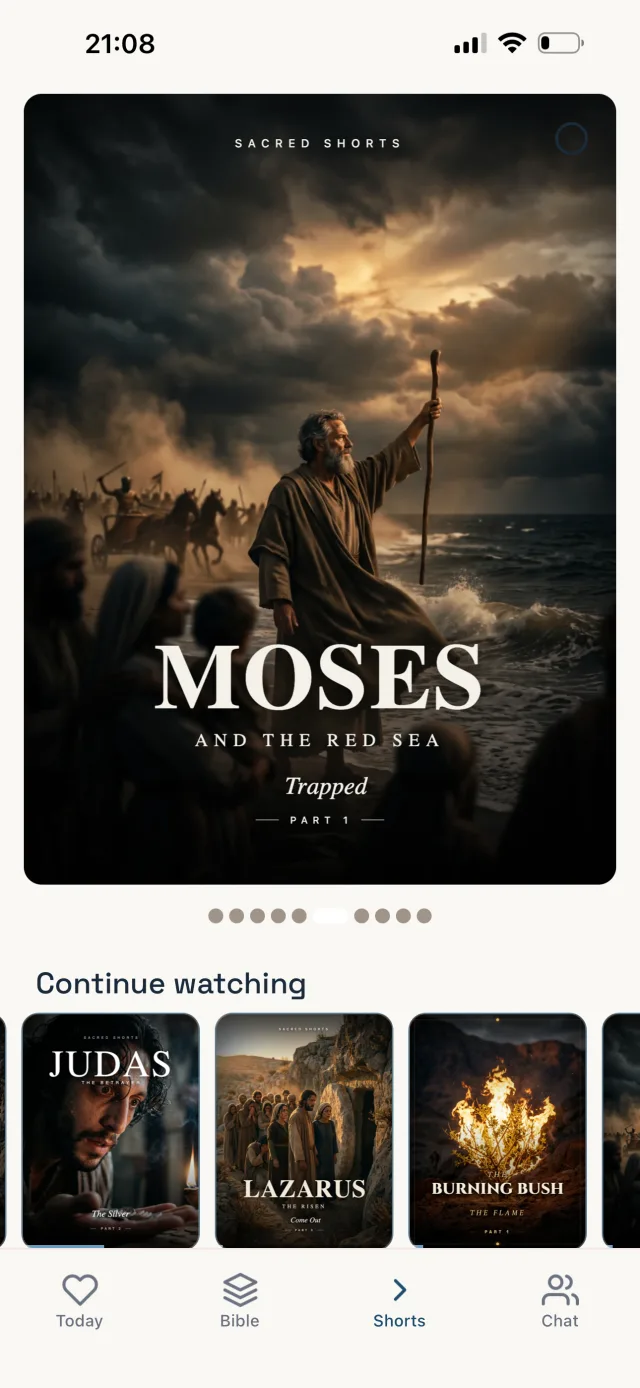
Watch this story come to life as a cinematic series in Sacred.
4.8on the App Store
Lessons from Moses's life
Moses's life offers several lessons for modern readers. First, his story teaches us about the power of faith and obedience. Despite his uncertainties, Moses trusted God's plan, reminding us that faith can lead us through the most daunting tasks, as discussed in Bible Verses About Trusting God's Plan. Second, Moses's journey shows the importance of humility in leadership. He exemplified servant leadership, prioritizing God's will and the well-being of his people. Third, Moses's perseverance through trials encourages us to remain steadfast in our commitments, even when faced with challenges.
For those seeking to deepen their faith and understanding of biblical stories, Sacred offers a personalized daily verse and guided prayer that can enrich one’s spiritual journey. Engaging with the Bible through platforms like Sacred can provide daily inspiration and guidance.
Moses's legacy
Moses's legacy is profound, impacting both Jewish and Christian faiths. As the lawgiver, his transmission of the Ten Commandments forms the ethical backbone of Christian morality. His story of liberation continues to inspire movements for freedom and justice worldwide. Moses's relationship with God exemplifies the possibility of personal closeness with the divine, encouraging believers to seek a deeper connection.
In today’s world, his legacy endures through the teachings and reflections available on platforms like Sacred, where one can explore and apply biblical wisdom in daily life.
FAQ
1. What did Moses do in the Bible?
Moses is best known for leading the Israelites out of Egyptian slavery and receiving the Ten Commandments from God. His life was marked by significant events like the parting of the Red Sea and the wanderings in the desert.
2. Why is Moses important to Christianity?
Moses is important because he represents faith, obedience, and direct communication with God. The laws he received, including the Ten Commandments, are foundational to Christian ethics and morality.
3. How did Moses communicate with God?
Moses communicated with God directly, often described as speaking "face to face" with the Lord. This unique relationship is highlighted in passages like Exodus 33:11, where it is noted that God spoke to Moses as one would speak to a friend.
 Sacred Shorts
Watch the Bible like never before
Cinematic Bible stories, a complete Study Bible, daily devotionals, and guided prayer. New episodes every week.