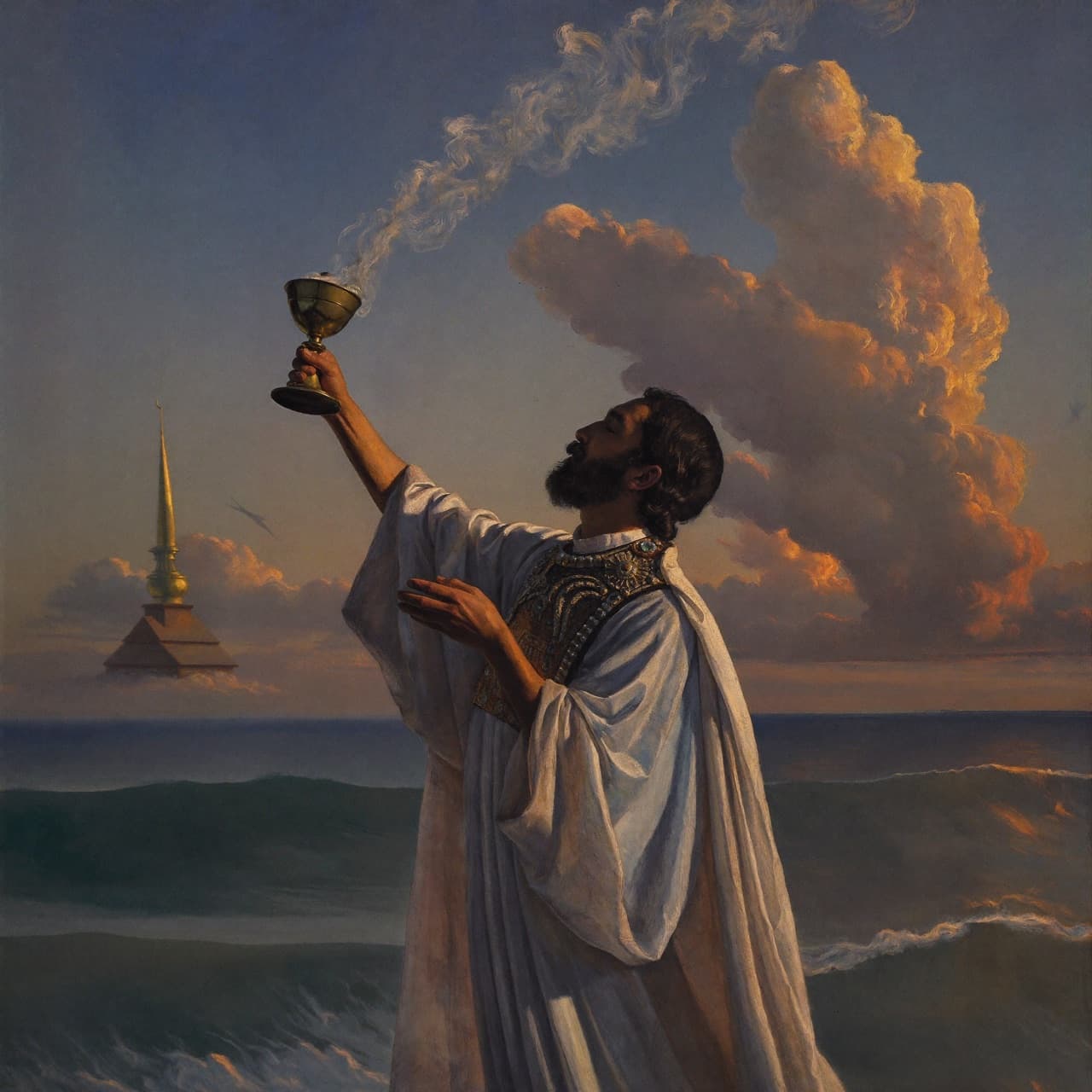
Aaron, the brother of Moses, was a pivotal figure in the Old Testament, known for being Israel's first high priest and Moses' spokesman. His contributions during the Exodus and his role in establishing the priesthood highlight his significance in biblical history and his impact on the spiritual heritage of Israel.
Story and Historical Context
Aaron was born into the Levite family in Egypt during Israel's bondage. As the elder brother of Moses, he played a crucial role in the Exodus narrative. The Book of Exodus introduces Aaron as Moses' spokesperson, chosen by God to assist Moses in his mission to free the Israelites from Pharaoh's grip. This partnership was necessary as Moses felt inadequate due to his speech impediment (Exodus 4:10-16, NIV).
Aaron's historical context is deeply tied to the formative years of Israel as a nation. His priestly lineage established the Levitical priesthood, central to Israel's religious life. As the first high priest, Aaron's responsibilities included overseeing sacrifices and rituals, which were vital for maintaining Israel's covenant relationship with God. These roles are detailed in the books of Exodus, Leviticus, and Numbers, providing a foundation for understanding God's expectations for worship and holiness.
The period of Aaron's life coincided with significant events such as the giving of the Law at Sinai and the construction of the Tabernacle. These moments are crucial for understanding the theological and liturgical developments within Israelite religion. Aaron's presence in these narratives underscores his importance in implementing God's directives and shaping the spiritual identity of the Israelites.
Key Moments in the Story of Aaron
Aaron as Moses' Spokesman
When God appointed Moses to lead the Israelites out of Egypt, Moses expressed his insecurity about speaking to Pharaoh. God responded by appointing Aaron as Moses' prophet and spokesperson (Exodus 4:14-16, NIV). Aaron's eloquence complemented Moses' leadership, making them an effective team in confronting Pharaoh and performing signs.
The First High Priest
Aaron's role as the first high priest is pivotal. In Exodus 28, God provides detailed instructions for Aaron's priestly garments, signifying his consecration and the sacred nature of his duties. As high priest, Aaron was responsible for offering sacrifices and entering the Holy of Holies, interceding for the people.
The Golden Calf Incident
One of Aaron's most controversial moments was his involvement in the Golden Calf incident (Exodus 32:1-6, NIV). While Moses was on Mount Sinai receiving the Ten Commandments, Aaron succumbed to the Israelites' pressure and fashioned a golden idol. This act of idolatry was a grave sin, highlighting Aaron's human frailty despite his high calling, as discussed in Bible Verses About Faithfulness. For more on this theme, see Bible Verses About Faithfulness.
Aaron and the Plagues
Aaron played a significant role during the plagues of Egypt. He wielded the staff that brought about several plagues, demonstrating God's power over Pharaoh and his gods (Exodus 7:19, NIV). These acts of judgment were essential in securing Israel's liberation.
The Budding of Aaron’s Staff
In Numbers 17, God confirms Aaron's priestly authority through a miraculous sign: his staff budded, blossomed, and produced almonds overnight. This event resolved disputes about leadership and solidified Aaron's divine appointment (Numbers 17:8, NIV).
Aaron's Death on Mount Hor
Aaron's journey ended on Mount Hor, where he was gathered to his people as God had foretold (Numbers 20:22-29, NIV). His death marked the end of an era, but his legacy continued through his descendants and the enduring institution of the priesthood.

The Bible has never felt like this
Watch this story come to life as a cinematic series in Sacred.
4.8on the App Store
Main Lessons We Can Learn from Aaron
Aaron's life offers profound lessons about faith, leadership, and human frailty. One primary lesson is the importance of obedience to God. Aaron's failure with the Golden Calf serves as a cautionary tale about the consequences of yielding to peer pressure and straying from God's commands. Despite this failure, Aaron's overall faithfulness in his priestly duties highlights the possibility of redemption and restoration.
Another lesson is the significance of supporting roles in leadership, which is further explored in Finding Strength in Scripture. Aaron's partnership with Moses underscores the value of collaboration and the unique contributions that each person brings to God's mission, which is further explored in Finding Strength in Scripture. This is a reminder that leadership is often a team effort, requiring different skills and strengths to achieve God's purposes.
Aaron's story also teaches us about God's grace and forgiveness. Despite his mistakes, Aaron was restored and continued to serve as high priest, illustrating God's willingness to forgive and use imperfect people for His work. This is an encouraging reminder that our past failures do not disqualify us from future service.
Exploring Aaron's life can deepen our understanding of these themes and enrich our spiritual journey. To dive further into this narrative and its implications, consider exploring resources like Sacred, which can provide additional insights and study tools.
Key Bible Verses About Aaron
- Exodus 4:14-16: Highlights Aaron's appointment as Moses' spokesperson, showing God's provision for Moses' perceived inadequacies.
- Exodus 28:1-3: Describes Aaron's consecration as high priest, emphasizing the sacredness of his role in Israel's worship practices.
- Exodus 32:1-6: Details the Golden Calf incident, serving as a warning against idolatry and impatience with God's timing, as seen in Exodus 32:1-6.
- Leviticus 16:32-34: Outlines Aaron's duties on the Day of Atonement, reflecting the seriousness of sin and the need for divine forgiveness.
- Numbers 17:8: The miraculous budding of Aaron's staff confirms his God-given authority and role as high priest.
- Numbers 20:22-29: Records Aaron's death and the transfer of his priestly garments to his son Eleazar, marking a transition in leadership.
FAQ
What was Aaron's role in the Exodus?
Aaron served as Moses' spokesman during their demand for Pharaoh to release the Israelites from slavery, playing a crucial role in the Exodus narrative.
How did Aaron become the first high priest?
Aaron was appointed by God as the first high priest of Israel as part of establishing the Levitical priesthood, responsible for performing sacrifices and rituals.
What mistake did Aaron make with the Golden Calf?
Aaron yielded to the people's demands and made a Golden Calf for worship, a significant act of disobedience to God during Moses' absence.
Aaron's life and legacy continue to be a source of inspiration and reflection for believers today. By understanding his story, we can gain valuable insights into God's character and the dynamics of faith and leadership. For those seeking to explore further, resources like Sacred offer an opportunity to delve deeper into the rich tapestry of biblical narratives and their enduring relevance.
 Sacred Shorts
Watch the Bible like never before
Cinematic Bible stories, a complete Study Bible, daily devotionals, and guided prayer. New episodes every week.



Frequently asked questions
Aaron served as Moses' spokesman during their demand for Pharaoh to release the Israelites from slavery, playing a crucial role in the Exodus narrative.
Aaron was appointed by God as the first high priest of Israel as part of establishing the Levitical priesthood, responsible for performing sacrifices and rituals.
Aaron yielded to the people's demands and made a Golden Calf for worship, a significant act of disobedience to God during Moses' absence.